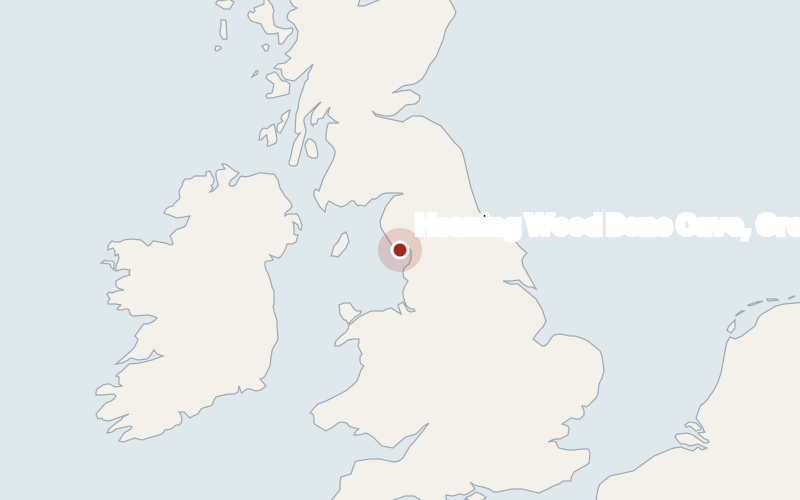
Iron Age · 50 BC–AD 50 · Thetford, Norfolk, England, United Kingdom
Complete Iron Age carnyx war trumpet and boar standard found in Norfolk
The deposit near Thetford, dated to between 50 BC and AD 50, also held Britain's first known boar's head standard and five shield bosses.
Official announcement
Thetford, United Kingdom Archaeologists have found a nearly intact carnyx, a Celtic war trumpet, in an Iron Age deposit near Thetford in Norfolk, England. Its conservator describes it as the most complete ever found. The team was working ahead of a housing development.
Buried with the trumpet was a sheet-bronze boar's head standard. It is the first of its kind found in Britain. The objects date to between around 50 BC and AD 50.
The firm Pre-Construct Archaeology carried out the excavation in 2025. Alongside the trumpet and the standard, the deposit held five shield bosses. It also held an iron object whose purpose has not yet been identified. The find has been presented on the BBC Two programme Digging for Britain.
The excavation director, Peter Crawley, has said he suspected the site was unusual before work began. Gary Trimble, senior project officer, told Digging for Britain that carnyces are extremely rare. He added that a boar standard is rarer still.
Tube, mouthpiece and bell all survive
A carnyx is a long trumpet held upright, up to two metres tall. Its bell is shaped like an animal's head, usually a boar, a wolf or a serpent. Celtic peoples across Europe used them roughly between 300 BC and AD 200. They used them to intimidate opponents and to rally and direct warriors in battle.
Romans depicted carnyces on reliefs and coins as trophies taken from defeated enemies. Examples have previously been found in France, Switzerland and Scotland. The best known is the Deskford carnyx from Scotland.
The Norfolk trumpet is the third carnyx found in Britain. The other two are fragmentary. Jonathan Carr is the conservator responsible for cleaning and stabilising it. He says it is made from extremely thin sheets of metal, which have become very brittle after 2,000 years in the ground.
Even so, the tube, the mouthpiece and the bell all survive. Carr says this is unique. He singled out a small eye as a detail of how well the trumpet has been preserved.
The standard is also made of sheet bronze. It was probably carried aloft as a visual rallying point for fighters. Fraser Hunter is curator of the Iron Age and Roman period at National Museums Scotland. He has pointed out that boars were very fierce animals to face in the hunt, and that their strength made them a fitting emblem for battle.
Lifted in one block of soil
The team lifted the whole assemblage in a single block of soil. This kept the objects in their original positions. The block was then scanned to map where each item lay before laboratory conservation began.
Carr describes the conservation work as full of risk. The reason is that the metal is so delicate.
The region was home to the Iceni. This tribe was later led by Boudica in her revolt against Rome in AD 60–61. The deposit's date range places it before the uprising.
Tim Pestell, senior curator of archaeology at Norfolk Museums Service, has said the find is a reminder of Norfolk's Iron Age past. The group of objects is now called the Norfolk Carnyx Hoard. Pestell said it gives archaeologists the chance to study a group of rare objects. It also gives them the chance to work out how the objects came to be buried in the county 2,000 years ago.
Why the objects were buried has not yet been established.
Historic England is coordinating research and conservation. It is working with Pre-Construct Archaeology, Norfolk Museums Service and National Museums Scotland.
Claudia Kenyatta and Emma Squire, executive directors at Historic England, have described the discovery as exceptional. They said they look forward to learning more about the Norfolk community that owned and used the objects.
The find has been reported to the county coroner. The coroner must hold an inquest to decide whether it is legally treasure. The hoard's long-term home will be decided after that.
Sources
Spotted a mistake? Tell the editor about a spelling error or a fact that is wrong. We correct stories openly.
Readers' picks show on the front page.
Follow @AncientHeraldHQ on X for the day's finds as they come in.

Comments
House rules. Stay on the subject, be kind to other readers and say where your facts come from. No advertising and no personal attacks. The editor reads along and hides comments that break these rules.
Loading comments…