Byzantium · Late 6th to mid-8th century AD · Hippos, Northern District, Israel
Second baptismal hall with rare liturgical objects found at Byzantine cathedral in Israel
The southern hall at Hippos, above the Sea of Galilee, was sealed by the earthquake of AD 749 with a three-cavity marble block, a reliquary and a bronze candelabrum inside.

Peer-reviewed paper
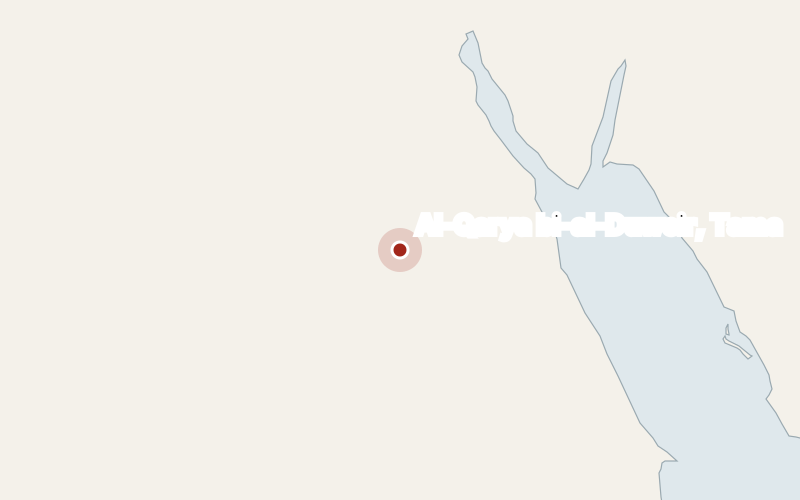
Hippos, Israel Archaeologists have published a second baptismal hall at the cathedral of Hippos, a Byzantine city in northern Israel. The city stands on a hill overlooking the Sea of Galilee. The hall was probably added to the church in the late 6th century AD.
A group of liturgical objects lay intact beside its font. The building collapsed in the earthquake of AD 749 and buried them. According to the researchers, no other known early Christian church had two baptismal halls.
The study is by M. Eisenberg and A. Kowalewska. It appeared in 2026 in the journal Palestine Exploration Quarterly. It describes what the authors call the southern photisterion (a Greek term for a baptismal hall) and the objects found in it.
Two fonts with different kinds of water
The cathedral already had a baptistery. This larger northern photisterion dates to the early phases of the building. The excavators have re-exposed its font, which sits in the middle apse. The original lead pipe survives in the apse, and the mosaic floor shows two phases.
The southern hall came later, probably after renovations carried out in AD 590–591. Its font is smaller and built into a corner of the room. This is an unusual arrangement. The authors read it as a sign that the space had a specialised function.
The team thinks the two halls may have allowed ceremonies to take place at the same time. One possibility is that they separated adults from infants. The larger font had a supply of flowing "living water" and would have served adult initiations. The smaller one held still water and may have been intended for children.
Another possibility is that the two spaces served different ritual traditions.
Oils, relics and a candelabrum left where they fell
Church furnishings of this period rarely survive in place, because of centuries of looting and decay. At Hippos, a set of religious objects lay intact near the southern font.
The most unusual is a marble block with three hemispherical cavities. No object of this type has been documented before. The researchers suggest the cavities held different sacred oils used during baptism.
Early Christian baptism often involved several anointings. The block may point to a three-stage anointing ritual. Such a practice has not been clearly recorded until now.
The excavators also found a large marble reliquary, one of the heaviest known from the region. It has several compartments. Its lid was designed so that oil could be poured over the relics inside, possibly for use in blessing rituals.
Its presence leads the authors to suggest that the baptistery was also a place where saints were venerated. Baptism would then have taken place in the presence of relics.
Near the font was a bronze candelabrum more than a metre tall. It is notably larger than comparable Byzantine examples. It is decorated and stands on animal-like feet.
The researchers place the find within a wider trend. Baptismal installations became more elaborate during the late 6th century. They suggest the second baptistery at Hippos could reflect a growing population, more pilgrims or changing theological practice.
The objects survived because of the earthquake of AD 749, which brought the complex down suddenly. Other parts of the cathedral were looted or reused. The southern hall stayed sealed under the debris.
Hippos was one of the cities of the Decapolis. In the Byzantine period it was a Christian centre, though few written records of it survive. Excavations at the site are continuing.
Sources
- Hidden for 1,300 Years: Archaeologists Uncover Rare Dual Baptism Complex at Ancient Hippos (Arkeonews)
Paper: Eisenberg, M., & Kowalewska, A. (2026). The Southern Photisterion at the Hippos Cathedral and its Unique Byzantine-Period Liturgical Implements. Palestine Exploration Quarterly, 1–22. https://doi.org/10.1080/00310328.2026.2634232
Spotted a mistake? Tell the editor about a spelling error or a fact that is wrong. We correct stories openly.
Readers' picks show on the front page.
Follow @AncientHeraldHQ on X for the day's finds as they come in.


Comments
House rules. Stay on the subject, be kind to other readers and say where your facts come from. No advertising and no personal attacks. The editor reads along and hides comments that break these rules.
Loading comments…