The Old Kingdom official was buried beside King Merenre's pyramid, and although his tomb held the instruments, no inscription in his burial chamber calls him a doctor.
· Announced by Ministry of Tourism and Antiquities and Supreme Council of Antiquities · Official announcement
Byzantium · 4th century AD · Ain el-Sabil, Dakhla Oasis, New Valley Governorate, Egypt
The 4th-century AD mudbrick settlement at Ain el-Sabil had a street grid, a central church, a fortress and an earlier house that may have served as a church.
· Announced by Supreme Council of Antiquities and Egyptian Ministry of Tourism and Antiquities · Official announcement
Greece & Rome · Late Ptolemaic to Byzantine · Muharram Bey, Alexandria, Alexandria Governorate, Egypt
Rescue excavations in central Alexandria found a site occupied from the Ptolemaic to the Byzantine period, with marble statues of Bacchus, Asclepius and possibly Minerva.
· Announced by Supreme Council of Antiquities and Egyptian Ministry of Tourism and Antiquities · Official announcement
Radar, ultrasound and resistivity scans by the ScanPyramids team located two air-filled cavities behind a polished granite patch, supporting the idea of a second entrance.
· Announced by Cairo University and Technical University of Munich · Peer-reviewed paper
Bronze Age · 13th century BC · Tell El-Faraoun (Imet), Sharqia Governorate, Egypt
At Oxyrhynchus in Minya, a Spanish-Egyptian team also found jars of cremated human remains buried with cat bones, a rare practice in the area at that time.
· Announced by University of Barcelona and Institute of the Ancient Near East · Official announcement
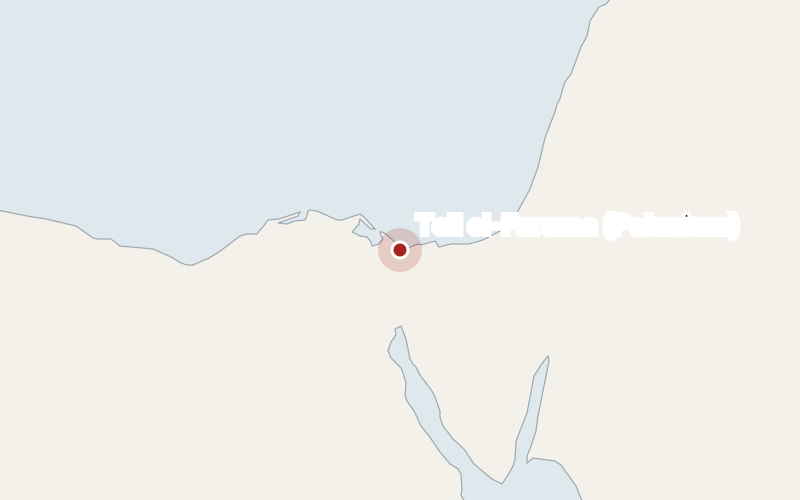
Greece & Rome · 2nd century BC to 6th century AD · Tell el-Farama (Pelusium), North Sinai, Egypt
First taken for a council chamber, the 35-metre brick basin at Pelusium, fed by a branch of the Nile, is now identified as a sanctuary used for nearly 800 years.
· Announced by Supreme Council of Antiquities and Egyptian Ministry of Tourism and Antiquities · Official announcement
A papyrus about 2,000 years old in the archives of the French Institute of Oriental Archaeology preserves part of Empedocles' poem Physica on vision and perception.
· Announced by University of Liège and French Institute of Oriental Archaeology (IFAO) · Book
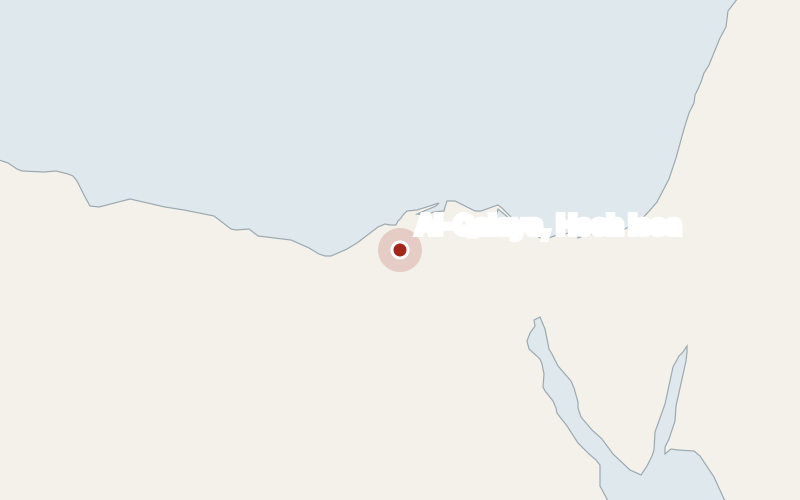
Byzantium · 5th century AD · Al-Qalaya, Hosh Issa, Beheira, Egypt
About 30 inscriptions in three ancient Indian languages, left in six tombs in Roman times, include eight signatures by a man named Cikai Korran, probably from southern India.
· Announced by University of Lausanne and French School of the Far East · Not yet peer reviewed
Iron Age · c. 1070–715 BC · Qurna, Luxor, Luxor Governorate, Egypt
The coffins still hold their mummies, date to Egypt's Third Intermediate Period, and most bear titles, chiefly 'singer of Amun', instead of their owners' names.
· Announced by Supreme Council of Antiquities and Zahi Hawass Foundation · Official announcement
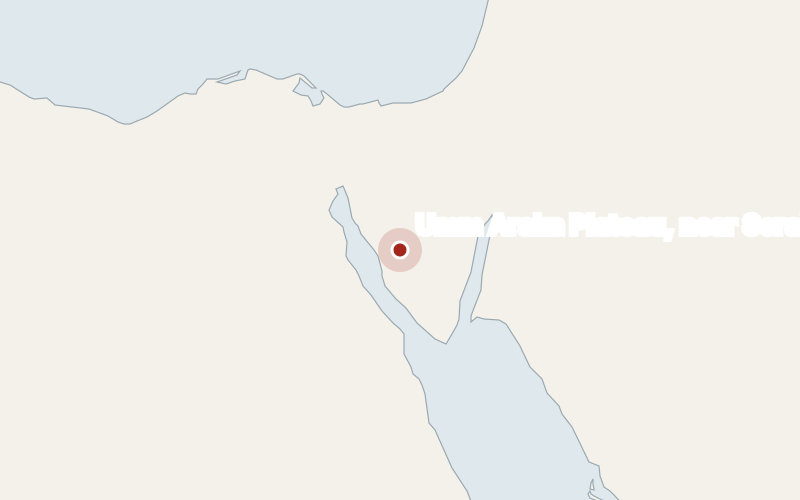
Stone Age · c. 10,000–5500 BC · Umm Araka Plateau, near Serabit el-Khadim, South Sinai, Egypt
An Italian team has cleared more than half of the 4,400-year-old Fifth Dynasty building, which groundwater kept out of reach after its location was identified in 1901.
· Announced by University of Turin and University of Naples · Official announcement
Stone Age · c. 3300 BC · Badari, Asyut Governorate, Egypt
Wear marks and six coils of leather thong indicate that a 63-millimetre copper alloy tool from a Predynastic grave was spun with a bow about 5,300 years ago.
· Announced by Newcastle University and Academy of Fine Arts Vienna · Peer-reviewed paper
Byzantium · c. AD 712/713 · St Catherine's Monastery, Mount Sinai, South Sinai, Egypt
Written around AD 712/713 in Syriac and later translated into Arabic, the 'Maronite Chronicle of 713' survives in one damaged 13th-century copy at St Catherine's Monastery.
· Announced by Austrian Academy of Sciences and Early Manuscripts Electronic Library · Peer-reviewed paper
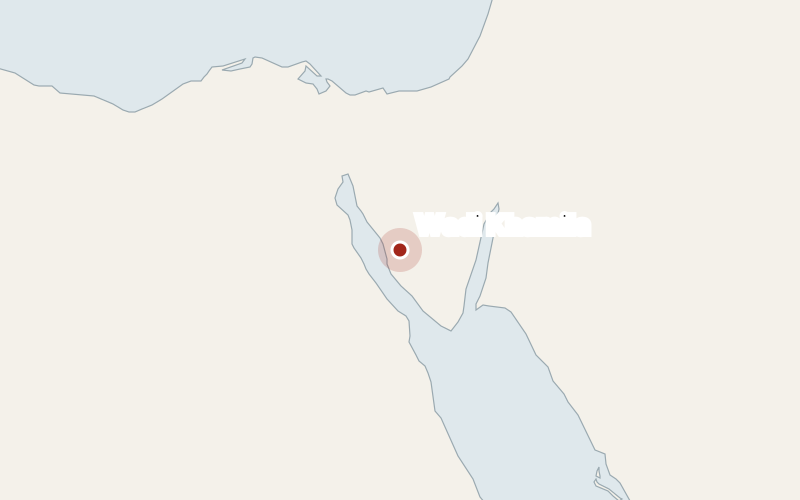
Found in Wadi Khamila by an Egyptian antiquities inspector, the scene carries an inscription naming the god Min as ruler of the copper region, a Bonn Egyptologist says.
· Announced by University of Bonn and Egyptian Ministry of Antiquities · Peer-reviewed paper
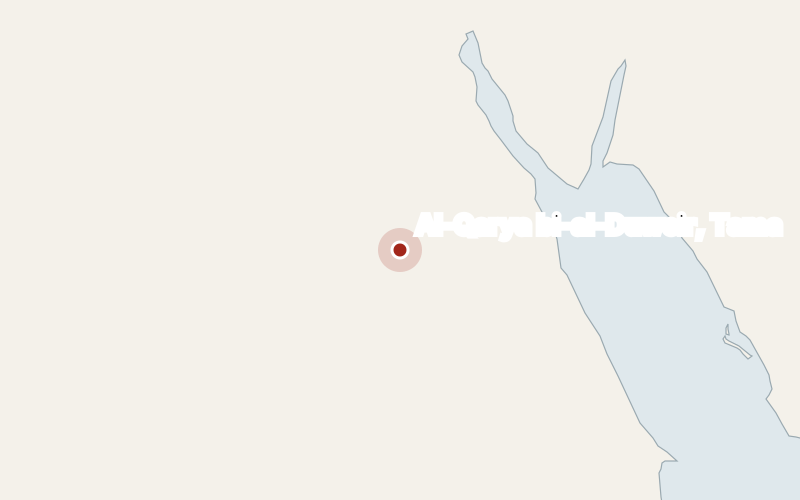
Byzantium · 5th–6th century AD · Al-Qarya bi-al-Duweir, Tama, Sohag Governorate, Egypt
Excavators in Upper Egypt found a fifth- or sixth-century AD monastic complex with a church, vaulted rooms thought to be monks' cells and Coptic inscriptions.
· Announced by Supreme Council of Antiquities and Ministry of Tourism and Antiquities (Egypt) · Official announcement