Stone Age · Neolithic, before 3000 BC · Loch Bhorgastail, Isle of Lewis, Outer Hebrides, Scotland, United Kingdom
Timber platform over 5,000 years old found beneath Scottish crannog on Lewis
Archaeologists recorded the Neolithic island above and below the waterline as one structure, using a new shallow-water camera method described in Advances in Archaeological Practice.
Peer-reviewed paper
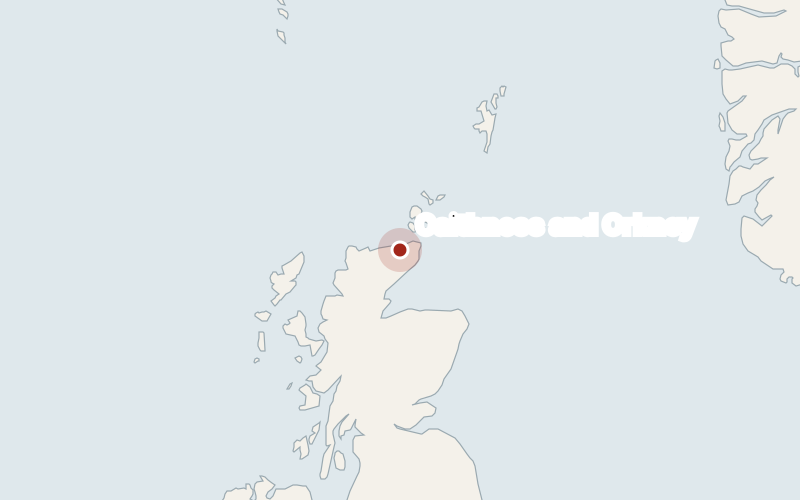
Loch Bhorgastail, Isle of Lewis, United Kingdom A small stone island in Loch Bhorgastail, on the Isle of Lewis in Scotland's Outer Hebrides, began as a circular timber platform. People built it more than 5,000 years ago, in the Neolithic. Archaeologists from the University of Southampton, working with the University of Reading, found its layered wood and brushwood construction beneath the island's stone capping. Hundreds of pieces of Neolithic pottery lay in the water around it.
The island is a crannog, a human-made islet of the kind found in many Scottish lochs. The team says its first phase is older than well-known monuments such as Stonehenge. Arkeonews, reporting on the work, puts the start of the site probably between about 3500 and 3300 BC. It bases this on the radiocarbon evidence.
Crannogs are small artificial islands that are typically thousands of years old. Hundreds exist in the lochs of Scotland and many remain unexplored or undiscovered.
Dr Stephanie Blankshein, archaeologist, University of Southampton
While crannogs were long thought to have been built, used and re-used, mainly between the Iron Age and the post-medieval period, we now know that some were first constructed much earlier during the Neolithic between 3800 and 3300 BC.
Dr Stephanie Blankshein, archaeologist, University of Southampton
Built in three phases over three thousand years
The team worked out how the island grew over several years of fieldwork. They used excavation, coring, survey and radiocarbon dating. The island started as a wooden platform around 23 metres across, topped with brushwood.
Some 2,000 years later, in the Middle Bronze Age, people added another layer of brushwood and stone. A further phase of activity followed about 1,000 years after that, in the Iron Age. A stone causeway, now underwater, runs from the shore to the island.
The pottery includes fragments of different types of jars and bowls. The researchers take it as a sign that Neolithic people first built the site, before the Bronze Age.
Blankshein points to two kinds of finds on and around such islands: pottery, which often still holds food residue, and worked stone. According to her, these finds suggest the islands were used for communal activities such as cooking or feasting.
While we still don't know exactly why these islands were built, the resources and labour required to construct them suggests, not only complex communities capable of such feats, but also the great significance of these sites.
Dr Stephanie Blankshein, archaeologist, University of Southampton
Loch Bhorgastail joins a group of Outer Hebridean crannogs now known to have Neolithic origins. The picture began to change in 2012. That year Chris Murray, a Lewis resident and former Royal Navy diver, found well-preserved Neolithic pottery on a loch bed near artificial islets. Murray, Mark Elliott of Museum nan Eilean and academic teams then showed that several of the islets were Neolithic in origin.
A cheaper way to record shallow water
The new paper is mainly about method. The crannog's stone, timber and brushwood cross the line between land and loch. Water less than a metre deep is hard to survey.
Land tools stop at the shoreline, and marine equipment works best in deeper water. That leaves what researchers call a "white ribbon" of missing data.
Fine sediments, choppy conditions, floating vegetation and distorted or reflected light all hinder shallow water imaging. Photogrammetry is very effective in deep water but runs into problems at depths of less than a metre. This problem is a well- known frustration for archaeologists.
Professor Fraser Sturt, principal investigator and Director of the Southampton Marine and Maritime Institute
Photogrammetry builds a 3D digital model from many overlapping photographs. During fieldwork in 2021, the team fixed two small waterproof cameras on a frame, a set distance apart. The cameras have low-light performance and a wide field of view.
A diver moved the rig through the water. Its positioning was controlled to centimetre accuracy, matching that of an aerial drone.
The team then combined the underwater images with drone surveys, ground control points, scale bars and satellite positioning data. The result was one continuous model of the island and its submerged remains, along with elevation maps.
By combining stereophotogrammetry, drone technology and some innovative post-processing of the data, we have managed to set out an accessible approach that is portable and cost effective.
Dr Stephanie Blankshein, lead author, University of Southampton
Blankshein, F. Pedrotti, Sturt and D. Garrow wrote the study. It is the first publication from the University of Southampton's Coastal & Inland Waters Heritage Science Facility. The team hopes the method can now help investigations at other similar sites.
Sources
- 5,000-year-old artificial island hidden in Scottish loch predates Stonehenge (Archaeology News)
- 5,000-Year-Old Timber Platform Beneath Scottish Crannog Reveals Secrets of a Prehistoric Artificial Island (Arkeonews)
- A wooden structure older than Stonehenge and a stone causeway found on a Neolithic artificial island in Scotland (La Brújula Verde)
- Archaeologists reveal secrets of prehistoric human-made island (Archaeology Wiki)
Paper: Blankshein S, Pedrotti F, Sturt F, Garrow D. At the Water's Edge: Photogrammetry in Extreme Shallow-Water Environments. Advances in Archaeological Practice. Published online 2026:1-16. doi:10.1017/aap.2025.10145
Spotted a mistake? Tell the editor about a spelling error or a fact that is wrong. We correct stories openly.
Readers' picks show on the front page.
Follow @AncientHeraldHQ on X for the day's finds as they come in.
Comments
House rules. Stay on the subject, be kind to other readers and say where your facts come from. No advertising and no personal attacks. The editor reads along and hides comments that break these rules.
Loading comments…