Stone Age · c. 3800–3200 BC · Caithness and Orkney, Highland and Orkney, Scotland, United Kingdom
Ancient DNA links men in Neolithic Scottish tombs through the male line
Genetic study of chambered tombs in Caithness and Orkney, used between about 3800 and 3200 BC, finds many men buried together were paternal relatives.
Peer-reviewed paper
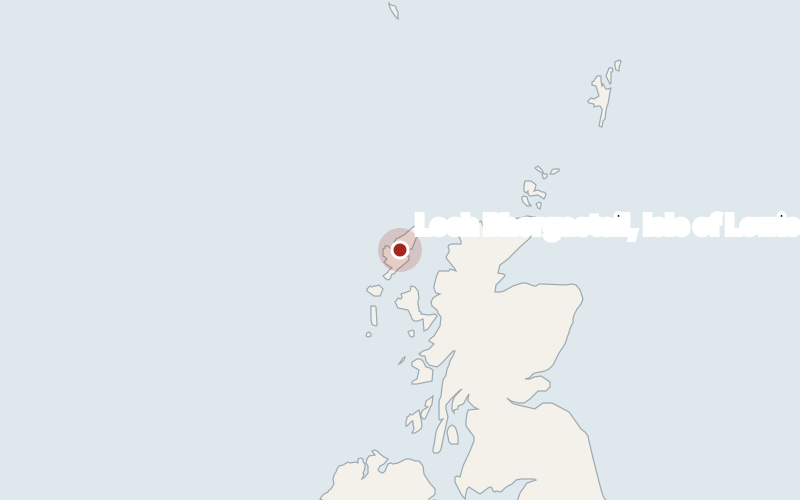
Caithness and Orkney, United Kingdom Many of the men buried in Neolithic chambered tombs in Caithness and Orkney, in the far north of Scotland, were close relatives through their fathers. That is the finding of a new ancient DNA study. The tombs date from about 3800 to 3200 BC.
The researchers argue that building the tombs and placing the dead inside was a way of tracing descent through the male line. In their view, it was also a way of carrying that line forward over many generations.
Vicki Cummings, a professor at Cardiff University, led the study. Her co-authors were Chris Fowler of Newcastle University and I. Olalde, S. Cuthbert and D. Reich. The study is published in the journal Antiquity.
Communities across north-western Europe often built chambered tombs for their dead in the early Neolithic. Earlier work had shown that some of the people buried in them were biologically related. But the surviving remains are usually fragmentary. That has made it hard to connect individual tombs to the kinship systems of the people who used them.
The new study used ancient DNA taken directly from skeletons in the Caithness and Orkney tombs. These include Tulloch of Assery A, near Loch Calder in Caithness.
Close relatives on the father's side
The team set out to answer two questions. The first was how often a tomb held the remains of close genetic relatives. The second was how often people were chosen for burial because they were related through the male line.
The main result concerns the biologically male individuals. Many of those placed in the same tomb, or in tombs near one another, were close relatives on the paternal side. The pattern recurs often enough that the authors read it as a consistent form of social organisation.
Cummings says the results are consistent with the practice of patrilineal descent. In this system, descent is traced through the male line.
Cummings also makes a suggestion about the people who brought the Neolithic way of life to Britain. For them, she says, this connection through the male line may have mattered as much as pottery, cattle and polished stone axes. Archaeologists usually treat those things as typical of the period.
Relatives placed in neighbouring tombs
The researchers then compared the genetic results with the layout and architecture of the tombs. They found that the dead were not placed at random. Communities grouped tombs together and put close relatives in neighbouring monuments.
The authors call these groupings descent networks. In their reading, the tombs made kinship visible as monuments spread across the territory.
Burial practices differed between Caithness and Orkney. But the team sees one shared feature: in both areas, people built the same kind of architecture for small kinship groups.
Two women buried in Orkney had genetic links across the sea. The report describes these links as connecting the main island with the mainland. The researchers take this as a sign that kinship ties could reach across what were then considerable geographic barriers.
Tombs as a way of tracing descent
The authors conclude that building and using the chambered tombs was probably a means of tracing lines of descent and projecting them into the future. They also conclude that burial was a central way for these communities to express group identity.
The title of the paper calls the tombs and the act of entombing the dead "technologies of descent and affinity".
Cummings notes that the analysis has reconstructed family relationships among people placed in the tombs more than 5,000 years ago. She says the study shows that the builders of these monuments gave particular weight to the male line. The pattern held across a wide area, she says, covering at least the two regions studied in northern Scotland.
Sources
- Large Megalithic Tombs in Neolithic Scotland Were Built to Safeguard the Paternal Line for Centuries (La Brújula Verde)
Paper: Cummings V, Fowler C, Olalde I, Cuthbert S, Reich D. Building tombs and entombing the dead as technologies of descent and affinity in Neolithic northern Scotland. Antiquity. 2026;100(410):324-339. doi:10.15184/aqy.2026.10291
Spotted a mistake? Tell the editor about a spelling error or a fact that is wrong. We correct stories openly.
Readers' picks show on the front page.
Follow @AncientHeraldHQ on X for the day's finds as they come in.

Comments
House rules. Stay on the subject, be kind to other readers and say where your facts come from. No advertising and no personal attacks. The editor reads along and hides comments that break these rules.
Loading comments…