Greece & Rome · 3rd century BC to 11th century AD · Athribis (Nagaa Sheikh Hammad), Sohag, Egypt
13,000 more inscribed pottery sherds found at Athribis temple site in Egypt
The Egyptian-German mission says Athribis has now yielded 43,000 ostraca since 2005, including more than 130 that deal with astronomy and the zodiac.

Official announcement
Athribis (Nagaa Sheikh Hammad), Egypt An Egyptian-German mission has found 13,000 more ostraca at Athribis, near Sohag in Upper Egypt, during its latest excavation season. Ostraca are broken pieces of pottery that were used as cheap writing surfaces. The texts on the Athribis ostraca are written in several languages and scripts. They span more than a thousand years, from the 3rd century BC to the 9th–11th centuries AD.
The mission is a joint project of Egypt's Supreme Council of Antiquities and the University of Tübingen. Work at the site began in 2005. According to the announcement, the new season brings the total recovered since then to 43,000. The researchers describe this figure as a world record for a single archaeological site.
Mohamed Abdel Badii is head of the Egyptian Antiquities Sector at the Supreme Council and the mission's Egyptian co-director. He said the team has recovered more than 42,000 ostraca in the last eight campaigns, since 2018. Taken together, the two figures mean almost all of the material has come out of the ground in recent years.
Hisham El-Leithy, Secretary General of the Supreme Council of Antiquities, said the number found at Athribis exceeds that from Deir el-Medina. Deir el-Medina was the village of workers and craftsmen on the west bank of Luxor. He added that the Athribis total also surpasses the inscribed fragments found anywhere else in Egypt in more than two centuries of excavation.
The Minister of Tourism and Antiquities, Sherif Fathy, also commented on the find. He called the assemblage a significant contribution to understanding Egypt's social and economic history across different periods.
Most texts are in demotic, many in Greek
Christian Leitz heads the expedition on the German side. He said the oldest inscriptions identified so far are tax receipts written in demotic and dated to the 3rd century BC. The most recent are jar labels with Arabic text from the 9th to 11th centuries AD.
The earlier part of that span covers the Ptolemaic and Roman periods. In those centuries Greek was used in the administration of Egypt alongside Egyptian.
Leitz gave an estimate of how the material breaks down. Between 60% and 75% of the ostraca carry texts in demotic script, and between 15% and 30% are in Greek. Around 4% or 5% show figurative or geometric drawings. Hieratic inscriptions make up about 1.5%, hieroglyphic signs about 0.25%, Coptic about 0.2% and Arabic roughly 0.1%.
Accounts, receipts, school exercises and temple texts
Markus Müller, director of the archaeological site, said most of the texts are documentary. They include accounting records, lists of various kinds, tax receipts and vouchers for the delivery of goods. The team has also recorded writing exercises by students.
Another group of texts relates to the work of the priests. These include hymns, prayers and consecration texts. There are also notes on the condition of animals offered for sacrifice.
According to Abdel Badii, Athribis is the richest site in Egypt for ostraca on astronomy and the signs of the zodiac. It has more than 130 examples on the subject. Most of them are written in demotic and hieratic.
Athribis was a cult centre of the lioness goddess Repit
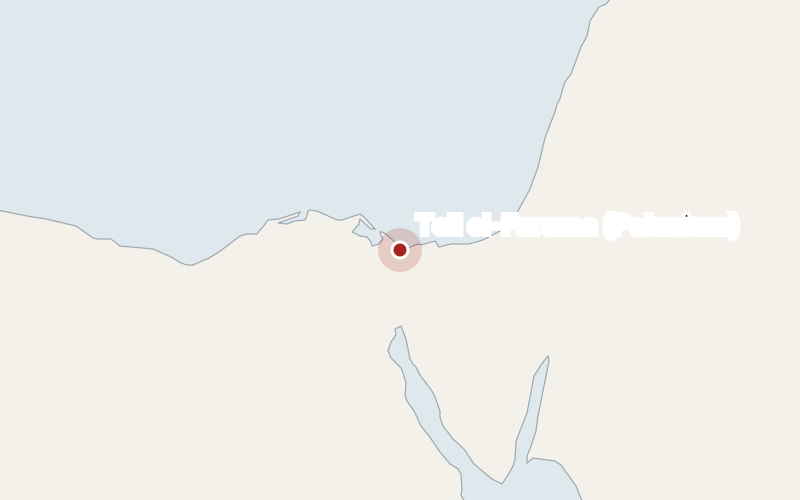
The remains of Athribis lie at Nagaa Sheikh Hammad, about seven kilometres west of the modern city of Sohag. In antiquity the settlement belonged to the ninth province of Upper Egypt. The province's capital was the nearby city of Akhmim, about ten kilometres east of the Nile.
Athribis was a cult centre of the goddess Repit. She was shown as a lioness and known as the eye of the sun god. She formed a local triad with Min, lord of Akhmim, and the child god Kolanthes.
A team of specialists in Paris is studying the texts
Since the 2018–2019 campaign, the texts have been studied by a multidisciplinary team called Ostraca d'Athribis. Sandra Lippert coordinates the team in Paris. It brings together more than twelve specialists in different scripts, languages and types of text, as well as a ceramics expert.
The project leaders expect their analysis to allow a more detailed reconstruction of social, economic and religious life in ancient Athribis.
Sources
Spotted a mistake? Tell the editor about a spelling error or a fact that is wrong. We correct stories openly.
Readers' picks show on the front page.
Follow @AncientHeraldHQ on X for the day's finds as they come in.


Comments
House rules. Stay on the subject, be kind to other readers and say where your facts come from. No advertising and no personal attacks. The editor reads along and hides comments that break these rules.
Loading comments…