Byzantium · 5th century AD · Al-Qalaya, Hosh Issa, Beheira, Egypt
Fifth-century monastic guesthouse found at early Christian site in Egypt's Nile Delta
The 13-room building at Al-Qalaya in Beheira has a prayer room, a hall for visitors, wall paintings of monks and a Coptic epitaph.
Official announcement
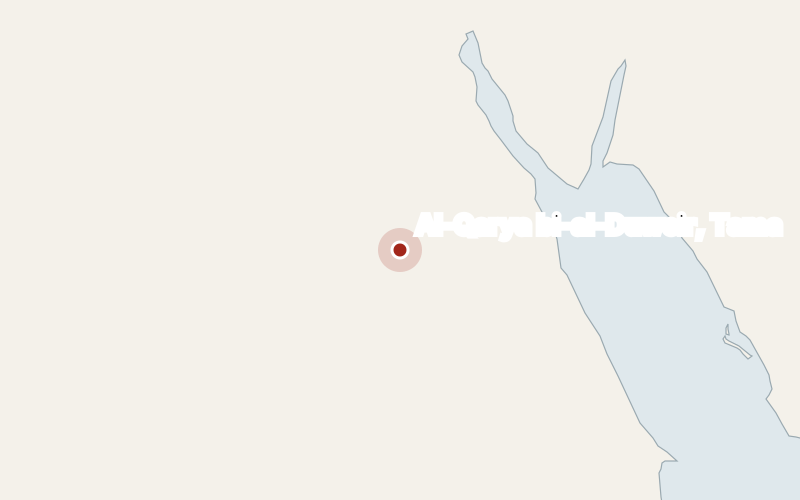
Al-Qalaya, Hosh Issa, Egypt Egyptian archaeologists have excavated a 13-room building from the 5th century AD at Al-Qalaya, a monastic site in the western Nile Delta. They think it was a guesthouse where monks received visitors, pilgrims and novices. Egypt's Ministry of Tourism and Antiquities announced the find in March 2026.
A mission of the Supreme Council of Antiquities is doing the work. The site is in the Al-Qalaya area of Hosh Issa, in Beheira governorate. The mission is led by Samir Rizk Abdel-Hafez, Director General of Antiquities in Beheira.
According to La Brújula Verde, the 5th-century date rests on first stratigraphic and typological assessments. These are based on the order of the layers and on the style of the building and finds. The same report uses qalaya for the isolated cells in which individual monks lived.
Hisham El-Leithy is Secretary-General of the Supreme Council of Antiquities. He said Al-Qalaya is the second-largest monastic community in the history of Christian monasticism. La Brújula Verde reports that it is surpassed only by complexes in Upper Egypt. The announcement does not give the measurements behind the ranking.
The site's architectural style reflects the earliest nucleus of monastery establishment.
Hisham El-Leithy, Secretary-General of the Supreme Council of Antiquities, as reported by Ahram Online
Monks' cells, guest halls and a prayer room
The building runs on a north to south axis. Diaa Zahran heads the Islamic and Coptic Antiquities Sector of the Supreme Council of Antiquities. According to him, smaller rooms were living quarters for monks, both individual and communal. Larger rooms were used for hospitality and teaching.
These spaces are divided by architectural arches and supported by service facilities such as kitchen and storage areas.
Diaa Zahran, head of the Islamic and Coptic Antiquities Sector, Supreme Council of Antiquities
In the northern part of the building the team found a large hall. It is lined with stone benches carved with plant motifs. The archaeologists think this was the main room for receiving and serving guests.
At the centre of the building is a prayer area facing east. Its eastern wall has an apse, or haikal. In front of the apse is a cross carved in limestone.
The building was altered several times over later periods. Walls were added, open spaces were subdivided and new decoration was put in. El-Leithy said the remains show a progression from individual cells to semi-communal living. In his account, the sequence ends in facilities built to receive visitors, whether elderly monks, novices or others.
Wall paintings, a marble column and a Coptic epitaph
Fragments of wall painting show monastic figures. The team identified them by their clothing. The figures are incomplete, however.
Other motifs include a braided frieze in red, white and black and an eight-petalled flower. One mural shows two gazelles facing each other among plant scrolls. At its centre is a double circle filled with floral decoration. El-Leithy described the paintings and decorations as among the most important sources for the study of early Coptic art in Egypt.
The excavators also recovered a complete marble column 2 metres long, with capitals and column bases. La Brújula Verde suggests the marble pieces may have been imported or reused.
There were complete pots and many sherds. Some are painted with floral and geometric designs, and some carry Coptic script.
Bird and animal bones came from inside one of the rooms, along with a large number of seashells. One report describes the shells as oyster shells. These remains give evidence of what the community ate.
A rectangular limestone slab with a Coptic inscription lay at the entrance to one room. A preliminary translation suggests it is a funerary stele recording the death of a man named Apa Kir, son of Shenouda. According to the announcement, the inscription confirms continued human activity at the site during the heyday of monastic life in the area.
The mission began work at Al-Qalaya in 2023. In that first phase it found two manshubiyat, which are groups of individual monks' cells. It also found the first wall paintings, several service buildings and pottery. The pottery was used for preparing food and storing grain and liquids.
Sources
- Archaeological discovery from the 5th century in the Nile Delta: the second-largest monastic complex in the history of Egyptian Christianity (La Brújula Verde)
- Egypt Unearths 1,500-Year-Old Monastic Complex in Al-Qalāyā, Second-Largest in Christian History (Arkeonews)
- Early 5th c. monastic building found at Beheira, Egypt (Archaeology Wiki)
- Fifth-Century Monastic Site Explored in Egypt (Archaeology Magazine)
Spotted a mistake? Tell the editor about a spelling error or a fact that is wrong. We correct stories openly.
Readers' picks show on the front page.
Follow @AncientHeraldHQ on X for the day's finds as they come in.


Comments
House rules. Stay on the subject, be kind to other readers and say where your facts come from. No advertising and no personal attacks. The editor reads along and hides comments that break these rules.
Loading comments…