Byzantium · 4th century AD · Ain el-Sabil, Dakhla Oasis, New Valley Governorate, Egypt
Byzantine town with basilica and about 200 ostraca found in Egypt's Dakhla Oasis
The 4th-century AD mudbrick settlement at Ain el-Sabil had a street grid, a central church, a fortress and an earlier house that may have served as a church.

Official announcement
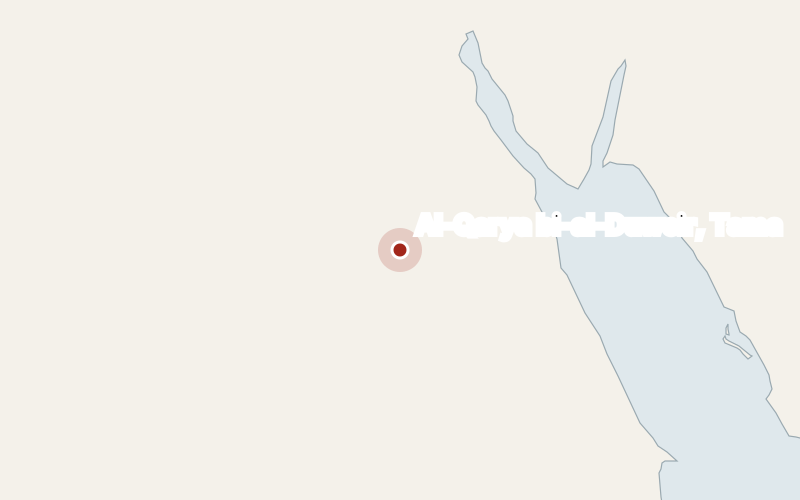
Ain el-Sabil, Dakhla Oasis, Egypt Egyptian archaeologists have excavated a planned mudbrick town of the 4th century AD at Ain el-Sabil in the Dakhla Oasis, in Egypt's Western Desert. It has a grid of streets with a basilica church at its centre. It also has houses, two watchtowers and a thick-walled fortress, and the team found about 200 inscribed potsherds in Coptic and Greek.
Egypt's Ministry of Tourism and Antiquities announced the discovery. A mission of the Supreme Council of Antiquities made the find. Mahmoud Masoud, General Director of Dakhla Antiquities, led the mission.
The ministry calls the site a complete residential city of the Byzantine period. The dates it gives for individual buildings all fall in the 4th century. Gold coins of the emperor Constantius II, who ruled from AD 337 to 361, were also found at the site. The site lies in New Valley Governorate.
A street grid around a church
According to the ministry's statement, main roads run north to south. Streets running east to west cross them, creating squares and open spaces. A basilica-type church stands at the centre of this network and faces one of the main roads. The mission dates the church to the mid-4th century AD.
Reports of the find say a layout this regular suggests the town was planned. On this view, homes, church and defences were placed deliberately.
Masoud said the settlement had the architectural elements needed for a fully functioning community. These included houses with large rooms and vaulted ceilings, bread ovens, kitchens and tools for grinding grain. They also included the two watchtowers at the edges of the town and the fortress.
Objects from the houses include domestic pottery and oil lamps. There are also small flasks (ampullae) for oils and perfumes, and stone grinding tools.
Hisham El-Leithy is Secretary-General of the Supreme Council of Antiquities. He said the discovery gives new and precise information about the daily life of the community that lived in the oasis during the Byzantine period. He added that the excavation has documented urban, social and economic aspects of the area at that time.
From a house church to a basilica
Two houses have been identified by their owners' names. One belonged to Tisus, a deacon of the church, and was built in the second half of the 4th century. The other, the house of Tabipus, dates to the early 4th century.
The team thinks the house of Tabipus may have served as a house church before the basilica was built. If further study confirms this, Ain el-Sabil would preserve a local sequence from worship in a private home to a purpose-built church. The names appear in different transliterations in reports of the find, including Tisous, Tisos and Tabibos.
That reading fits evidence from Kellis, a Roman-period village in the same oasis at modern Ismant el-Kharab. Excavations there have produced houses, churches, temples, papyri and ostraca. These finds document the shift from traditional religion to Christianity in the 3rd and 4th centuries AD.
The ministry singled out the written finds as among the most significant. Ostraca are pieces of broken pottery used as cheap writing material. The roughly 200 from Ain el-Sabil carry texts in Coptic and Greek. According to the ministry, they record purchases and sales, letters and other details of the inhabitants' daily lives.
Greek remained important in administration and written culture in late antique Egypt. Coptic was increasingly used in Christian and everyday writing.
The mission also recovered a large number of bronze coins in excellent condition. They bear portraits of emperors, Latin inscriptions and Christian symbols. The group of gold coins from the reign of Constantius II was found with them.
Coins date activity at a site, but not necessarily every wall or phase of occupation. How they relate to the building and use of the town will depend on fuller publication.
Excavation at Ain el-Sabil is continuing.
Sources
- A Complete Byzantine City Discovered in the Dakhla Oasis in Egypt (La Brújula Verde)
- Egypt Uncovers a Complete Byzantine City in the Dakhla Oasis, Preserving Streets, Homes, Church, and Daily Records (Arkeonews)
- Byzantine city with 200 written records uncovered in Egypt’s Dakhla Oasis (Archaeology News)
- Byzantine City Uncovered in Egypt’s Dakhleh Oasis (Archaeology Magazine)
Spotted a mistake? Tell the editor about a spelling error or a fact that is wrong. We correct stories openly.
Readers' picks show on the front page.
Follow @AncientHeraldHQ on X for the day's finds as they come in.

Comments
House rules. Stay on the subject, be kind to other readers and say where your facts come from. No advertising and no personal attacks. The editor reads along and hides comments that break these rules.
Loading comments…