Iron Age · c. 900–200 BC · Issyk, Almaty Region, Kazakhstan
Ancient DNA suggests Scythian elites inherited power and Kazakhstan's Golden Man was male
Genomes from 85 Iron Age steppe nomads show that high-status people were related across cemeteries more than 100 km apart, and nearly half of them were women.

Peer-reviewed paper
Issyk, Kazakhstan Ancient DNA from 85 people buried on the Eurasian steppe in the Iron Age suggests that Scythian elites passed their status down through families. The data also suggest that ruling kin groups reached across cemeteries more than 100 kilometres apart.
The same study produced the first genome-wide data from the "Golden Man" of Issyk in Kazakhstan. These data indicate that the individual was most likely male. That helps to settle a long-running question about one of Central Asia's best-known burials.
The study was published in Science Advances. Its authors are Ayshin Ghalichi of the Max Planck Institute for Evolutionary Anthropology in Leipzig, Ainash Childebayeva of the University of Texas at Austin and their colleagues. The colleagues include researchers at the Institute of Genetics and Physiology in Almaty. The work combines archaeology, anthropology and genetics.
The people studied lived in Central Eurasia between about 900 and 200 BC. Across the steppe at that time, high-ranking people were buried under kurgans, large earth mounds raised over a grave. They were buried with gold ornaments, weapons and animal offerings. Others went into smaller, simpler mounds with few or no grave goods.
Archaeologists have long read the difference as a sign of growing inequality. But they could not tell whether elite rank was earned or inherited.
Of the 85 individuals, 38 came from elite kurgans with weapons and gold. The other 47 came from smaller mounds without gold. For 46 of them, the genomes were sequenced for the first time.
Elite relatives buried at different sites
The elite individuals were 11 times more likely to be related to each other than to the non-elite people. That figure comes from a Live Science report cited by Archaeology Magazine.
Among the elite remains, the team identified two pairs of brothers, a brother and a sister, and a parent and a child. They also identified two pairs of grandfathers and grandsons. Two of the brothers were buried at different sites, as were the grandfathers and grandsons.
The genomes also showed signs of unions between relatives. The elite group's ancestry was less varied than that of the wider population. The team found signs of a small breeding population among elite families.
We did not expect to find that social status was passed down from generation to generation but it was clear that high-status individuals were more related to each other, even when buried at different archaeological sites, than to people of lower status who were buried at the same sites with the elites
Ainash Childebayeva, assistant professor of anthropology, University of Texas at Austin
The elite tombs also lay closer to one another than the non-elite ones. "It is possible that this indicates some degree of geographic centralization of the elite burials being on average closer to each other," Childebayeva said.
No sign of a strict male or female line
The researchers found no clear sign that elite couples settled with either the husband's or the wife's family after marriage. They take this to mean that elite social organisation was more complex than a simple male or female line. Women were well represented among the elite.
Nearly half of the elite individuals in our dataset were female, indicating that women held high social status within Iron Age Scythian society.
Ayshin Ghalichi, researcher, Max Planck Institute for Evolutionary Anthropology and University of Texas at Austin
The Golden Man of Issyk fits among other Saka people
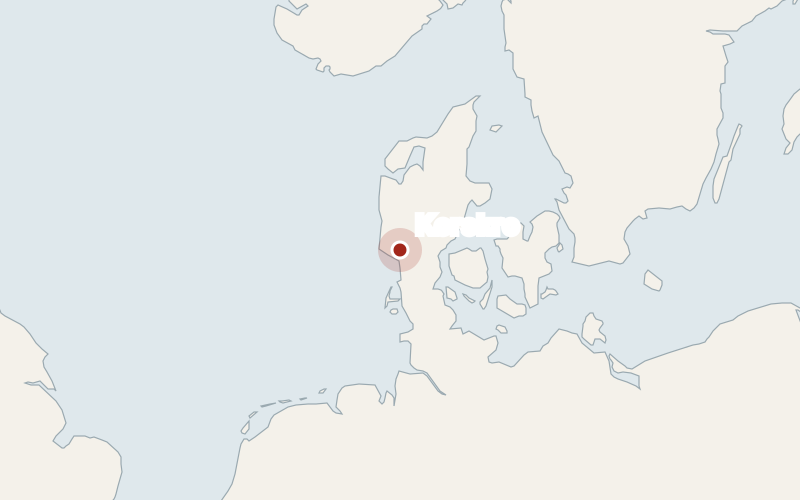
The Issyk kurgans are a royal burial complex of the Saka culture. They lie about 50 kilometres east of Almaty. The Golden Man burial dates to 400–300 BC.
The individual lay in a wooden chamber with more than 4,000 gold ornaments and weapons. The chamber also held a gold-embroidered headdress and objects in animal form. A silver bowl in the grave carries an inscription that has not been deciphered.
Scholars had debated for years whether the person was a man or a woman. The new data place him within the genetic variation of other Iron Age Saka individuals.
Scythians and Sakas: two names for the steppe nomads
Leyla Djansugurova of the Institute of Genetics and Physiology in Almaty explained the two names. Scythians and Sakas are collective names for early Iron Age nomadic tribes who lived between the Danube and the Altai. The Greeks used the first name, which Herodotus coined. Persian and Indian sources used the second.
Historically, the term Scythians more often refers to the western tribes (Black Sea region), and Sakas to the eastern ones (Central Asia, Altai). All these tribes were united by the so-called Scythian-Saka animal style in art, a distinctive military skill, and nomadic herding.
Leyla Djansugurova, Institute of Genetics and Physiology, Almaty
According to Djansugurova, the study produced the first reliable DNA data from several elite Saka burials. Among them are the Golden Man of Issyk, the Urzhar Princess and the Shilikty Golden Man.
The team examined elite and non-elite individuals from the same sites together. This let them determine the specifics of elite marriage. It also let them identify cemeteries whose dead were related to one another.
Sources
- Ancient DNA reveals Scythian elite families passed power across generations (Archaeology News)
- DNA analysis of the “Golden Man” reveals that a few elite families ruled Scythian nomadic society 2,500 years ago (La Brújula Verde)
- Family ties link Scythian elite burials across the Eurasian steppe (Archaeology Wiki)
- Scythian DNA Study Examines Elite Family Ties (Archaeology Magazine)
Paper: Ayshin Ghalichi et al., Ancient DNA reveals elite dynastic rule among Iron Age Eurasian Steppe nomads. Science Advances 12, eaef0108 (2026). DOI: 10.1126/sciadv.aef0108
Spotted a mistake? Tell the editor about a spelling error or a fact that is wrong. We correct stories openly.
Readers' picks show on the front page.
Follow @AncientHeraldHQ on X for the day's finds as they come in.


Comments
House rules. Stay on the subject, be kind to other readers and say where your facts come from. No advertising and no personal attacks. The editor reads along and hides comments that break these rules.
Loading comments…