The roughly 9,000-year-old work area had a stone-paved floor and six postholes, and Turkey's culture minister says local mining continued for about 2,000 years.
· Announced by Turkish Ministry of Culture and Tourism · Official announcement
At least 30 storage jars, some probably made in the Jordan Valley, lie about 30 metres down near Kekova Island, though the wooden hull has not survived.
· Announced by Akdeniz University and Macquarie University · Peer-reviewed paper
Bronze Age · c. 1400 BC · Kayalıpınar (Šamuḫa), Sivas province, Turkey
Excavators at Kayalıpınar, ancient Šamuḫa, recovered 131 tablets and fragments from the reign of Tudhaliya II in 2026, bringing the archive to 184 pieces.
· Announced by Turkish Ministry of Culture and Tourism and Koç University · Official announcement
Bronze Age · c. 1259 BC · Hattusa (Boğazkale), Çorum province, Turkey
The clay piece, part of an Akkadian copy of the pact between Ramesses II and Hattusili III, preserves clauses on people fleeing between the two kingdoms.
· Announced by Turkish Ministry of Culture and Tourism and German Archaeological Institute · Official announcement
The 70-centimetre sculpture, about 11,000 years old, reverses a known motif at the site, where earlier statues show humans carrying live leopards on their backs.
· Announced by Turkish Ministry of Culture and Tourism and General Directorate of Cultural Heritage and Museums · Official announcement
Stone Age · c. 12,000–10,000 BC · Şika Rika 5, near Akıncı, Mardin province, Turkey
Round stone houses at Şika Rika 5 in Mardin province date to about 12,000–10,000 BC, and the team says settled life there may have had deeper local roots than thought.
· Announced by Mardin Artuklu University · Peer-reviewed paper
Bronze Age · c. 1915–1595 BC · Beycesultan Höyük, Denizli Province, Turkey
Two scraps of cloth from Beycesultan Höyük, carbonised by fire nearly 4,000 years ago, include a blue hemp fabric made with a single needle around 1915–1745 BC.
· Announced by Koç University · Peer-reviewed paper
Iron Age · c. 810–786 BC · Körzüt Fortress, Muradiye, Van province, Turkey
Falling water in the Atatürk Dam reservoir exposed stone enclosures near Kızılöz village in Samsat, which investigators believe are around 11,000 years old.
· Announced by Adıyaman Museum Directorate and Adıyaman University · Official announcement
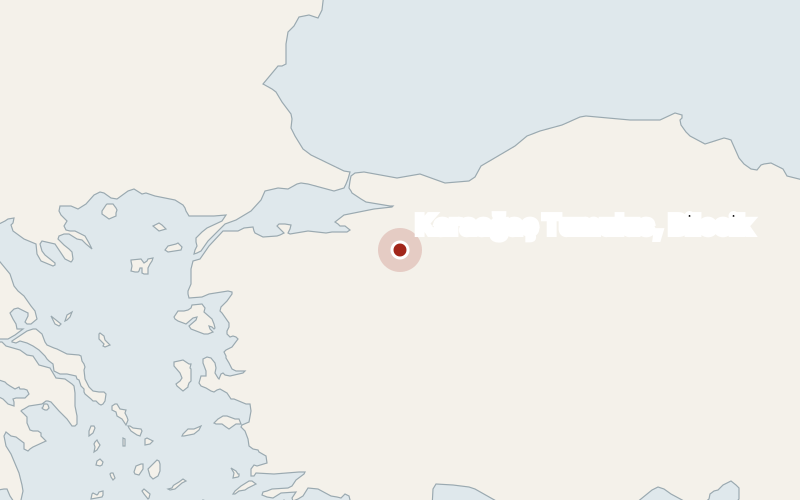
Iron Age · 8th century BC · Karaağaç Tumulus, Bilecik, Bilecik Province, Turkey
A wooden burial chamber, decorated bronze buckets and an inscribed pot from the Karaağaç Tumulus near Bilecik closely match royal burials at Gordion, a new study argues.
· Announced by Bilecik Şeyh Edebali University · Peer-reviewed paper