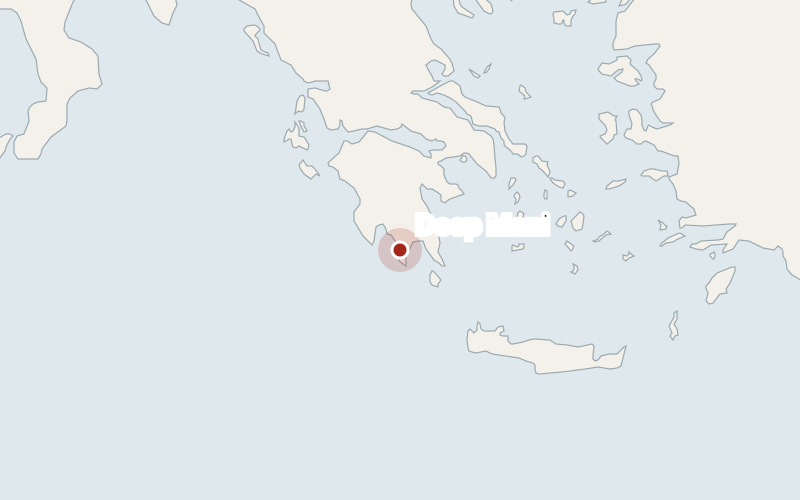
Greece & Rome · 6th century BC · Kleidi Samikon, Elis, Western Greece, Greece
Burnt bronze sheets point to an archive in a 6th-century BC Greek temple
Excavators at Kleidi Samikon in Elis found fire-damaged bronze sheets in the same hall that yielded a large bronze inscription in 2024.
Official announcement
Kleidi Samikon, Greece Excavators at Kleidi Samikon in Elis, western Greece, have found a mass of fire-damaged bronze sheets. They lay on the floor of a temple built in the 6th century BC. The find supports the idea that one of the building's two halls was used to store documents.
The sheets came to light during the 2025 season. They were in the same room where a large inscription on a bronze sheet was found in 2024.
Birgitta Eder of the Archaeological Institute of the Austrian Academy of Sciences co-directs the excavation. Her co-director is Erofili-Iris Kollia of the Ephorate of Antiquities of Elis. The dig is part of a five-year programme running from 2022 to 2026. The Greek Ministry of Culture released photographs of the finds.
An unusual temple with two halls
The building is 28 metres long and 9.5 metres wide. It is thought to date to the second half of the 6th century BC. Inside, two large halls share one overall structure. Each hall has a row of columns running down its long axis.
The layout is unusual for Greek religious buildings of the period. It had already led researchers to suggest that the two halls served different purposes.
This season the team worked in the northwest hall. In 2024 this room produced the bronze inscription and an almost complete marble perirrhanterion, a basin that held water for ritual purification.
The excavators first removed a thick layer of broken Laconian-type roof tiles from the collapsed roof. Directly on the floor beneath it were clear traces of a fire. That fire destroyed the building in antiquity.
The burnt debris and the fallen roof sealed whatever was in the room at the moment of destruction. Among these objects was a concentration of bronze sheets. Many are broken and partly deformed by the heat. Over the centuries, water seeping through the soil has corroded their surfaces.
Photographs released with the announcement also show two other objects. One is a bronze mirror from the temple excavations. The other is a seal stone from Samikon carved with a kneeling woman washing her hair.
Why the team thinks the room was an archive
The excavators say the find strengthens the hypothesis that the room was an archive. They point to two things. The sheets cluster in one part of the hall, and the inscription was found there the year before.
It was not uncommon for Greek sanctuaries to keep public and private documents, often written on metal. Arkeonews notes that such records could include treaties, laws, dedications and civic records.
If the interpretation is correct, the hall held a group of texts that were probably official or sacred in nature. The sheets are fragmentary. Their conservation and analysis continue.
The season also yielded three terracotta fragments of a large disc. The disc once crowned the roof as an ornament, probably at the ends of the façade or on the ridge. The pieces indicate that it was at least one metre across. It was painted black and red and carried relief bands in concentric rings.
Ornaments of this kind are characteristic of Archaic architecture. They are typical in particular of workshops in the Laconian tradition or elsewhere in the Peloponnese. La Brújula Verde reports that comparative study will be needed to establish where this one was made.
The site lies near the ancient city of Samikon in Triphylia. It sits between the mountains and the Ionian Sea, on routes through the western Peloponnese. Ancient writers connect the area with a sanctuary of Poseidon Samios. Arkeonews describes this sanctuary as a place of regional political gatherings among local communities.
The date of the fire is still open. On preliminary study, pottery found with the destruction layer places it in an advanced phase of the sanctuary's life.
The team expects two kinds of evidence to help reconstruct how the building was destroyed and possibly abandoned. One is the position of the objects in the northwest hall. The other is the traces left by the blaze.
The programme is now in its fourth year. The Gerda Henkel Foundation funds it, with support from the Austrian Archaeological Institute. In the coming campaigns the team plans to finish excavating both halls. It also plans to establish the full extent of the sanctuary and work out its relationship with the ancient settlement of Triphylia.
Sources
Spotted a mistake? Tell the editor about a spelling error or a fact that is wrong. We correct stories openly.
Readers' picks show on the front page.
Follow @AncientHeraldHQ on X for the day's finds as they come in.


Comments
House rules. Stay on the subject, be kind to other readers and say where your facts come from. No advertising and no personal attacks. The editor reads along and hides comments that break these rules.
Loading comments…